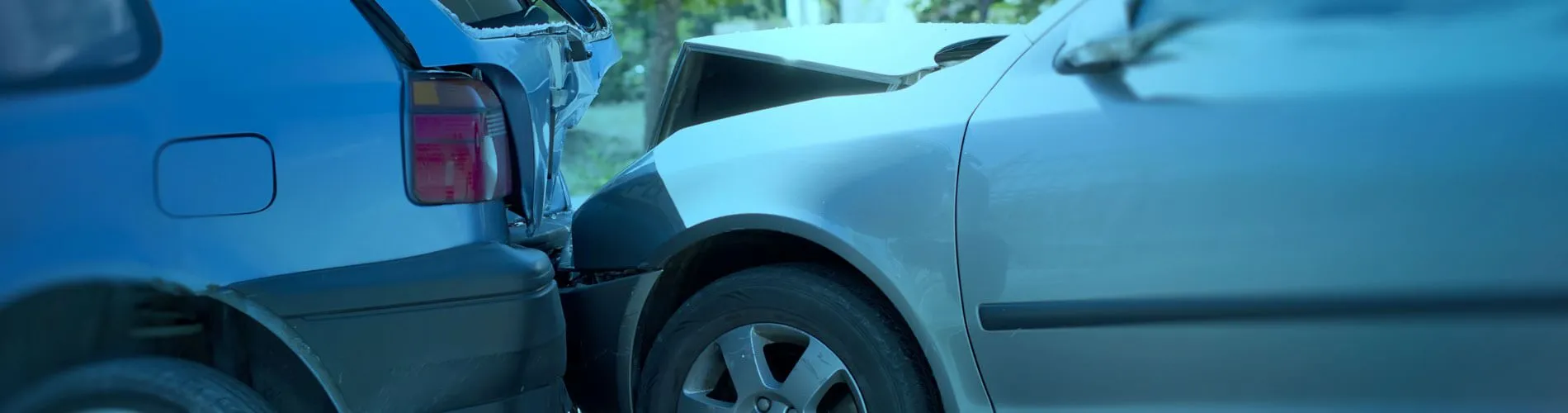
According to the Federal Highway Administration (FHWA), more than half of crashes involving injury or death happen at or near intersections. Understanding why intersections are more dangerous can help Jacksonville-area drivers avoid collisions. If you’ve been involved in a car accident at an intersection, this information can also help you understand who may be responsible for the crash and how that will affect your ability to collect damages.
Note, though, that every motor vehicle accident case is different. The best source of information about possible responsible parties and possible compensation is an experienced Florida car accident lawyer. When you work with an injury attorney at Harrell & Harrell, you can be confident your claim is in good hands. Fighting for Florida injury victims is the heart of our practice.
Serious car accidents are more common at intersections for a variety of reasons. Some of the most common include:
A driver operating on an uninterrupted stretch of road typically has a clear view ahead. Occasionally, the driver might encounter a blind curve that prevents them from seeing far ahead on the road. In that situation, drivers typically slow down and exercise extra vigilance.
At intersections, though, obstructions are common. In a business district, buildings may be close to the corner, meaning a driver can’t see around the corner until they’re quite close to the intersection. Bushes, trees, bus benches, and other objects can also make it hard to see oncoming traffic.
With or without obstructed views, drivers have a lot more to monitor at an intersection. Vehicles may be traveling in four different directions at the same time, sometimes in multiple lanes. Pedestrians and bicyclists are also required to cross at intersections, meaning that foot traffic and other vulnerable road users are mixed in with vehicle traffic. This can be further complicated by the mix of intersection types and traffic signs and signals.
When an entire intersection is governed by lighted signals, the right of way should be clear. But, in many other situations, some drivers get confused—or simply try to duck the line. This is especially true at four-way-stop intersections or intersections with no traffic controls.
There are clear rules. For example, at a four-way stop, the driver who stops at the intersection first has the right of way. If two or more drivers reach the intersection at the same time, the one to the right has the right of way, and the one to the left yields. But, some drivers lose sight of or ignore the rules. And, some drivers who are clear on the right of way rely too heavily on others following the rules. That can be a dangerous combination.
Given the potential confusion over the right of way at unlighted intersections, you might expect that red-light intersections would be much safer. In fact, the FHWA says you’re more likely to be injured in a red light crash than in any other type of traffic accident. One reason is the same type of overreliance that plays into accidents when one driver disregards right-of-way rules. A driver who has a green light may not be sufficiently vigilant about monitoring possible cross-traffic, assuming that other drivers will stop at the red light.
Despite the obvious dangers of running a red light, about 25% of respondents to the most recent Traffic Safety Culture survey from the AAA Foundation for Traffic Safety said they’d done so in the previous 30 days.
A head-on collision sounds dangerous, and that type of accident can be quite serious. But, when cars meet head-on, there’s a lot of metal and space between the drivers themselves and the other vehicles. On the other hand, when a car is “t-boned”—hit broadside at a 90% angle—there’s just the car door between the driver or passenger and the other vehicle. That means their body absorbs more of the impact than it might in other types of collisions, often leading to more serious injuries.
In some cases, it may seem clear that one driver is responsible for an intersection crash. But often, the situation is more complicated. There may be more than one responsible party. For example, you may think that a driver who runs a red light is solely to blame for a resulting crash. But, what if that driver entered the intersection to avoid another vehicle that was racing toward them from behind? Or, if the other driver involved in the collision could have avoided the crash, but was speeding and looking down at a text message as they passed through the intersection?
Nuances like this are just one reason that it’s best to consult an experienced auto accident lawyer, even if you think that fault is clear. Remember, the insurance company is not your advocate. If there is an opportunity to point the finger at a third party or to try to assign some of the blame to you, the insurance company won’t hesitate—avoiding or minimizing payouts to injured people improves their bottom line.
An experienced Florida personal injury attorney who has extensive experience advocating for injured victims can investigate your accident and help identify and ensure that you pursue compensation from all possible responsible parties.
At Harrell & Harrell, we know that a serious injury or the death of a loved one can disrupt every area of your life, not to mention the financial burden that comes with large medical bills and lost work time adds to the tremendous stress you are already experiencing. Our whole team is dedicated to getting fair compensation for car accident victims and others who have been injured through someone else’s fault.
You can schedule a free consultation with a Harrell & Harrell car accident lawyer right now. Just call (904) 251-1111 right now, or fill out our contact form to get started. There’s no obligation, and we never charge a fee unless/until we recover compensation for you.







Navigating a personal injury claim can be overwhelming. Our quick, easy-to-understand videos cover the most common questions we hear from clients — so you can feel informed and confident every step of the way.


"*" indicates required fields