


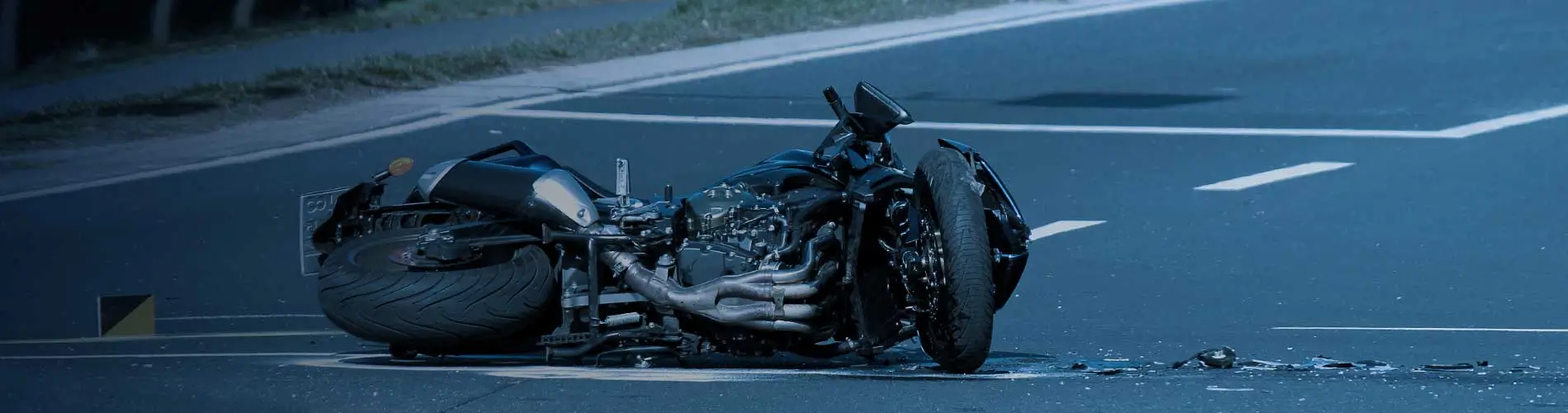
The motorcycle accident attorneys here at Harrell & Harrell fight for maximum compensation by counteracting potential juror bias and navigating complex Florida laws regarding helmet exceptions and comparative fault, allowing injured Florida bikers to focus entirely on their recovery.
We have helped countless Florida bikers who have been injured due to the negligence of another driver, an unsafe roadway, or a defective motorcycle. There’s little doubt that motorcycles are a lot of fun to ride and, in today’s economy, they can save you money at the gas pump. However, people riding motorcycles have very little protection and are always at a much greater risk of serious injury when involved in a motor vehicle accident. Head injuries or even a fatality can occur even though the motorcycle rider was wearing a helmet and the proper riding gear. In most road accidents, the motorcyclist is thrown from his or her motorcycle into the street or into other vehicles involved in the crash.
If you or a loved one were injured in a motorcycle accident, contact us for a free, no-obligation consultation to determine the strength of your case. To get started, contact our experienced motorcycle accident attorneys online or call 800-251-1111.
Florida motor vehicle insurance policies include personal injury protection (PIP), which ensures that someone injured in a crash has access to medical payments and replacement wages, regardless of fault. Though the mandatory PIP coverage is just $10,000, it can cover losses in a relatively minor accident or provide some buffer while a car accident case is in progress.
Motorcyclists don’t get that same protection. Worse, many bikers don’t realize PIP doesn’t apply to them until after they’ve been injured and are seeking benefits.
With PIP off the table, your motorcycle accident attorney will have to investigate what other types of insurance coverage are available to compensate you for your injuries. The main possibilities include:
In some cases, the insurance coverage may be even more complicated. For example, the driver may have umbrella coverage that expands the amount of compensation available. Or, the driver may have been operating a vehicle in the course of doing business, meaning the company may be liable for the injuries.
Florida bikers aren’t required to carry the same types of insurance as operators of passenger vehicles. However, skipping insurance coverage can be a serious mistake. For example, if you don’t purchase liability insurance and you cause an accident, you could end up personally on the hook for damages. If you skip comprehensive or collision coverage and a tree falls on your bike or you’re in a crash that’s your fault, you could end up paying for repairs or replacement on your own. And if you don’t opt for uninsured motorist coverage and you’re hit by an uninsured driver, you could be without any access to the compensation you need to get medical care and rebuild after your injuries.
Injured motorcyclists face challenges car drivers don’t. Insurance adjusters often jump to conclusions, assuming the rider was speeding or riding recklessly simply because they were on a bike. These assumptions can lead insurers to delay claims, dispute liability, or offer settlement amounts that fall far short of real medical costs.
Most motorcycle crashes are caused by negligent drivers failing to yield or check their blind spots. Overcoming an insurer’s assumptions requires replacing speculation with hard facts. From day one, our focus is on building a clear, evidence-backed record of how the crash occurred and its full impact on your life.
Our legal team acts quickly to secure vital evidence, including police reports, dashcam or surveillance footage, vehicle data, and accident reconstruction analysis. Establishing clear proof of driver negligence ensures insurance companies evaluate your claim based on facts rather than bias.
You don’t have to deal with insurance adjusters alone. Our Jacksonville motorcycle accident attorneys handle all communications, counter unfair claim tactics, and pursue full compensation so you can focus entirely on your recovery.
A motorcycle helmet is a type of protective gear that’s critical for motorcyclist safety. Everyone who rides a motorcycle should wear one for his or her safety, even if the law doesn’t require one. Sometimes, a person may choose not to wear a helmet and, if an accident occurs, then the issue becomes how the lack of a helmet affects any legal claims the rider has—and, the answer is, it depends.
Some states have universal helmet laws for motorcycle riders and, in those states, by not wearing one, the motorcyclist could have less of an ability to pursue a claim after an accident. The defendant could say that, because the rider broke the law by not wearing a helmet, then he or she was negligent and not entitled to compensation.
The state of Florida has a universal helmet law (Florida Statutes Section 316.211), but it comes with some exceptions. The law states, for example, that all operators of motorcycles and all passengers must wear properly-fitting protective headgear that complies with Department of Transportation (DOT) regulations while riding.
Having said that, there are exceptions in Florida that permit certain riders, by law, to not need to wear helmets. This includes when:
Note that this is the law at the time of writing this page, but laws often evolve and, even when they stay the same, motorcycle law can be quite complex, with nuances that may be hard for the average layperson to understand and interpret.
As far as filing a personal injury claim after being in a motorcycle accident, you can do so whether you were wearing a helmet or not. Having said that, if the law requires you to wear one and you weren’t, then the defendant can use this to fight against your claims for damages.
He or she may say that, had you been wearing a helmet as the law requires, then your injuries may not have occurred at all. Or, if they had, the argument might go, they would have been less severe. The result might be that the court assigns a percentage of fault to you, reducing potential compensation.
If you fall into one of Florida’s exception categories as listed in the bullet points above, then this usually can’t be used against you by the defendant.
Under Florida’s comparative fault law, you may still be eligible to recover compensation even if you were partially at fault for the accident or not wearing a helmet. As long as you were not more responsible than the other party, you can pursue damages.
As you can see, motorcycle law can be complicated. So, even if you’re not sure whether you have a case, contact our personal injury attorneys in Jacksonville. Our firm’s founders have practiced law since 1974, giving us decades of handling motorcycle accident claims that range from the simple to the complex.
Depending upon the severity of the crash, you may or may not be able to take the steps that will be outlined here. Remember that each item applies only if you can safely do so given your physical condition and the environment.
Once you have attended to your injuries, spoken to the police and gathered information from the other driver, contact an experienced Jacksonville motorcycle accident lawyer. The insurance company is not on your side, and it is best to let your attorney interact with them on your behalf.

When a crash occurs, it’s important that the accident is thoroughly investigated to uncover the full explanation, one that goes beyond the fact that someone didn’t pay enough attention while driving. Sometimes, the driver who crashed into the motorcycle was on his or her cell phone or focusing on what was going on inside the car, not what was happening on the road.
In the case of cell phone usage, as just one example, this phone evidence needs to be collected and preserved. Plus, the accident itself needs to be recreated and analyzed. To observe and preserve evidence about any skid marks, as another example, we need to get to the scene as quickly as we can. In each of these types of situations, here’s the bottom line: the person riding the motorcycle should not be blamed for someone else’s distracted driving.
These details are not always preserved by the police and can rarely be collected by the injured person—who often doesn’t even get the chance to really tell his or her side of the story. Plus, the police report, in and of itself, is not direct evidence so, if you were a victim of an accident while riding a motorcycle, or a loved one was, contact us immediately so we can collect the evidence for you.
Injuries sustained in a motorcycle crash can range from road rash—where the accident victim is often bruised with abrasions on exposed skin—to broken bones and more, with spinal cord injuries and brain damage among the most serious consequences. Some of the more severe injuries can lead to a need for amputation.
These accidents, unfortunately, also result in fatalities. In fact, the Governors Highway Safety Association report indicates that, when looking at 2016-2017 data, the state with the most motorcycle fatalities in Florida.
Depending upon the specifics of your accident, the crash can lead to numerous crises, from the injuries themselves to the emergency medical bills and those for continuing care and/or rehab. There will potentially be lost wages as you recover, with the injuries sometimes preventing a return to work. Injuries can lead to chronic pain, as well as depression and/or anxiety, reducing the quality of life, overall. Plus, there may be a loss of consortium.
Each situation is unique, and so it’s best to have an experienced attorney review your specific circumstances as soon as possible.
Now, we’ll share one example of a client who was successfully represented by our motorcycle injury attorneys.
Our motorcycle injury attorney team was contacted by an off-duty law enforcement officer, who shared how he’d been riding his motorcycle on a rural, two-lane country road. Suddenly, a young woman made an unexpected left-hand turn across his path, hitting him with her car. He was rendered into an “incomplete” paraplegic because of a burst fracture at T012. During his initial surgery, doctors performed a four-level fusion from T-10 to L2; then, after three months of rehabilitation, our client learned how to walk using arm crutches.
We represented him as he sought fair compensation. Because the defendant was a fourth-generation resident of the small, conservative community, the settlement offered was under $1 million, which was not an acceptable amount.
The case then went to a jury trial. There, the defendant was found to be 96 percent at fault, and the jury awarded our client a $9.4 million verdict. This includes consortium damages to his spouse in the amount of $1.8 million.
You can find more about the verdicts and settlements we get by aggressively advocating for our clients.
The type of crash described above is not unusual. Left-turn accidents are among the most common types of motorcycle accidents. In the most common scenario, the driver of the car or truck makes a left turn in front of a motorcyclist who is proceeding straight through the intersection.
This type of collision happens for many reasons, including driver distraction. But there are other factors, too. Motorists are simply less likely to notice motorcycles than larger passenger vehicles, in part due to a psychological phenomenon known as attention blindness.
Rear-end collisions are among the most common types of collisions across vehicle types. One vehicle typically rear-ends another when:
Often, rear-end collisions involving two passenger cars are relatively minor–the type of crash commonly described as a “fender bender.” Unfortunately, this type of crash is much more dangerous for a motorcyclist. Even a low-speed tap from behind can cause injuries, since it destabilizes the bike and jars the rider–perhaps throwing them from the motorcycle. At higher speeds, a rear-end collision often causes serious injury or death to the motorcyclist.
Lane changes are also ripe for collisions, in part because drivers often fail to signal that they are about to change lanes or wait until the very last second to signal. Blind spots increase the risk, particularly if the driver hasn’t signalled–that means the driver can’t see the motorcyclist and the motorcyclist doesn’t know the driver is planning to change lanes.
Like many other types of accidents, a lane change collision can be much more serious for a motorcyclist than the driver of a car or truck. While one car might sideswipe another, or even just force the other vehicle to swerve suddenly, making even slight contact with a motorcycle can mean the bike falls and slides, potentially killing the biker. Even forcing a quick swerve can have serious consequences for a motorcyclist, as making unexpected contact with gravel on the side of the road, an object in the road, or a pothole can cause a serious crash.
Potholes, debris in the road, and even grass clippings can cause a serious motorcycle crash. In this type of case, the entity responsible for road maintenance may be partly or wholly liable for the crash and resulting damages.
Our motorcycle accident attorneys believe that everyone deserves good legal representation, with each case managed with the same vigorous approach. Plus, we offer a free consultation.
So, if you or a loved one has been seriously injured in a motorcycle crash, the motorcycle accident lawyers at the law office of Harrell & Harrell, P.A., can help you get your life back on track. Our motorcycle injury attorneys in Jacksonville truly understand the legal nuances involved with a motorcycle crash, and how to use the legal system when dealing with your insurance company and the insurance companies of the other drivers involved.
We will work diligently to ensure that you receive the settlement you need for compensation, including property damage, medical expenses, lost wages, pain and suffering, and long-term health care. Unfortunately, we can’t change what happened, but we can help you get on the road to recovery. Call us today at 800-251-1111 or 904-251-1111 for a no cost, no obligation consultation with a Jacksonville personal injury attorney.























Motorcycle accidents happen in many different ways. One of the most common variables is entirely within the control of the motorcyclist: according to the CDC, 42% of motorcycle riders who died in single-vehicle crashes in 2022 were alcohol-impaired. Other common causes include distracted drivers, poor road maintenance, debris in the road, and faulty or poorly maintained equipment. Often, more than one factor will contribute to causing a motorcycle accident. For example, a motorcyclist may be cut off by a distracted driver and have to swerve, only to hit a piece of debris that should have been cleared from the road. An experienced motorcycle accident attorney can help identify and investigate the possible responsible parties.
The first steps after a motorcycle accident are essentially the same as they would be after any motor vehicle accident. First, if you’re able, move to a safe place out of traffic. Exchange insurance information with any other drivers involved, and report the accident to the police. If you’re able, take photographs of the scene before anything is moved. If you are injured or are uncertain about whether you have been injured, allow emergency responders to check you out at the scene, and then follow up as necessary with your own doctor or an urgent care facility or emergency room. Write down your recollections of the accident as soon as possible afterward. Then, call a local motorcycle accident lawyer right away.
Always remember that insurance companies–even your own–make their money by collecting more in premiums than they pay out in benefits and settlements. Never assume they’re operating in good faith.
If your claim is denied, you are offered a settlement that seems too low or too quick, or you feel the insurance company is giving you the runaround or stalling, it’s a good idea to contact a Jacksonville motorcycle injury attorney. Experienced motorcycle accident lawyers know the pitfalls of dealing with an insurance company and how to avoid them and effectively assert your claim.
An experienced motorcycle accident attorney can help you in many ways, from providing a buffer to protect you from bad-faith insurance maneuvers to identifying possible responsible parties, determining insurance coverage available, gathering evidence, managing deadlines and technical requirements, interviewing witnesses, negotiating for a settlement and, if it’s in your best interest, arguing your case in court.
If you were injured in a motorcycle accident on or after March 24, 2023, you have two years from the date of your accident to file a personal injury suit. However, if you were injured before March 24, 2023, the statute of limitations for a motorcycle accident claim was four years.
However, you should know that it’s generally not a good idea to wait until the deadline is close. The sooner after the accident you contact a motorcycle accident lawyer, the better opportunity that lawyer will have to investigate your case, gather evidence, and talk to witnesses while memories are clear and physical evidence is still available.
Every case is different, but some common types of compensation in motorcycle accident cases include payment of medical bills, reimbursement for other costs incurred due to the accident and recovery time, income lost during your treatment and recovery, compensation for property damage such as the damage to your motorcycle, and intangible losses like pain and suffering.
Florida law allows you to seek compensation even if you share some responsibility for the accident or weren’t wearing a helmet. As long as you are not more at fault than the other party, you may still recover damages, though your compensation can be reduced based on your level of responsibility.
Your attorney will conduct an investigation and gather additional evidence. However, there is some evidence that can only be collected right away. If you are able, you should take photographs of the accident scene before anything is moved, collect contact information from any witnesses, take note of any homes or businesses with cameras that may have captured the collision, and make notes about what happened as close in time to the accident as possible.
The amount of a settlement or verdict in a motorcycle accident case depends on a wide variety of factors. Some of the most common include the seriousness of the injury, the amount of medical bills and other necessary expenses, whether the injury is temporary or permanent, the earning capacity of the injury victim before and after the crash, and the degree to which the motorcyclist shares responsibility for the accident.
The timeline for a motorcycle accident case depends on the complexity of the case, the amount of money involved, and even factors such as the insurance company on the other side. A relatively simple case may be settled in a matter of months, whereas complex cases and cases that go to trial may take two years or more.
Some of the most common factors include the amount of your medical bills, the amount of lost income, other expenses associated with the accident and your recovery, how long your period of recovery was or will be, whether you will have any permanent injuries or limitations, and how much income you lost. In cases involving serious, permanent injuries, factors such as your age at the time of the crash and your anticipated earning capacity if the accident hadn’t happened will also play a role.
Yes, but in this situation it is best to consult a Jacksonville motorcycle accident attorney to discuss the best way to proceed. As a practical matter, you may or may not be able to collect compensation directly from the responsible driver. And, you may have other options, such as pursuing a claim under your own uninsured motorist coverage.
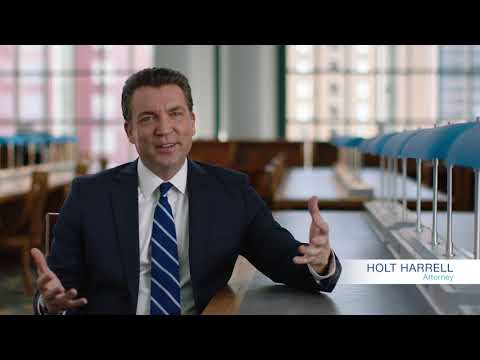
Navigating a personal injury claim can be overwhelming. Our quick, easy-to-understand videos cover the most common questions we hear from clients — so you can feel informed and confident every step of the way.



"*" indicates required fields